

Designs and configurations
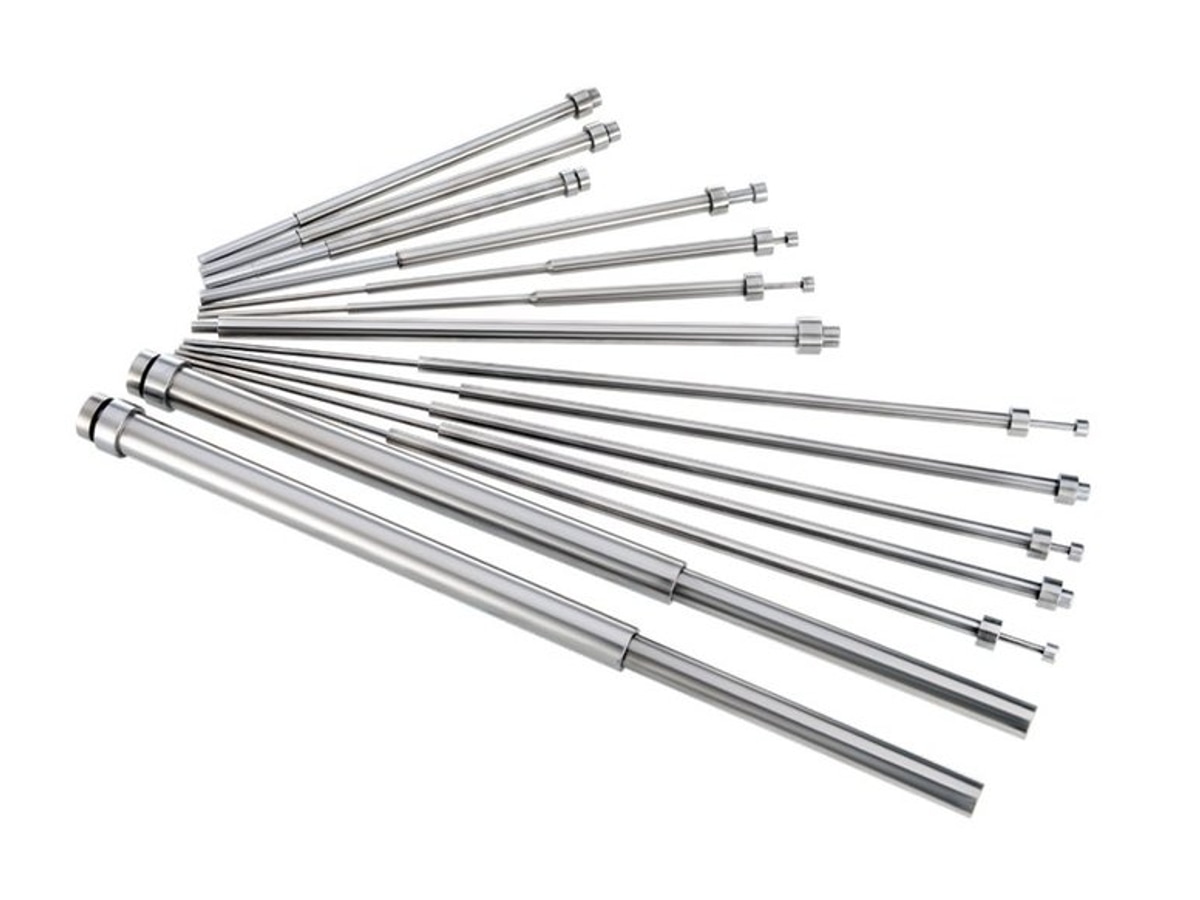
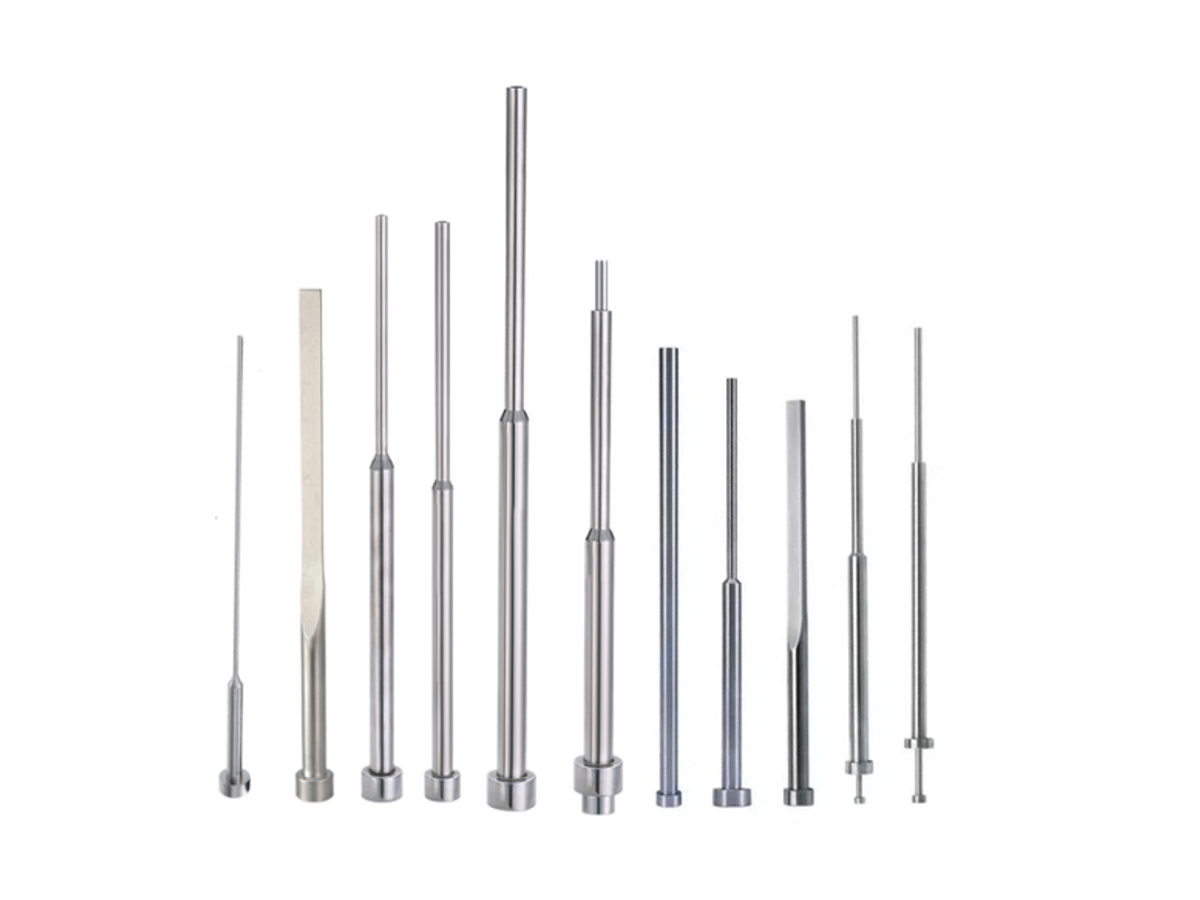
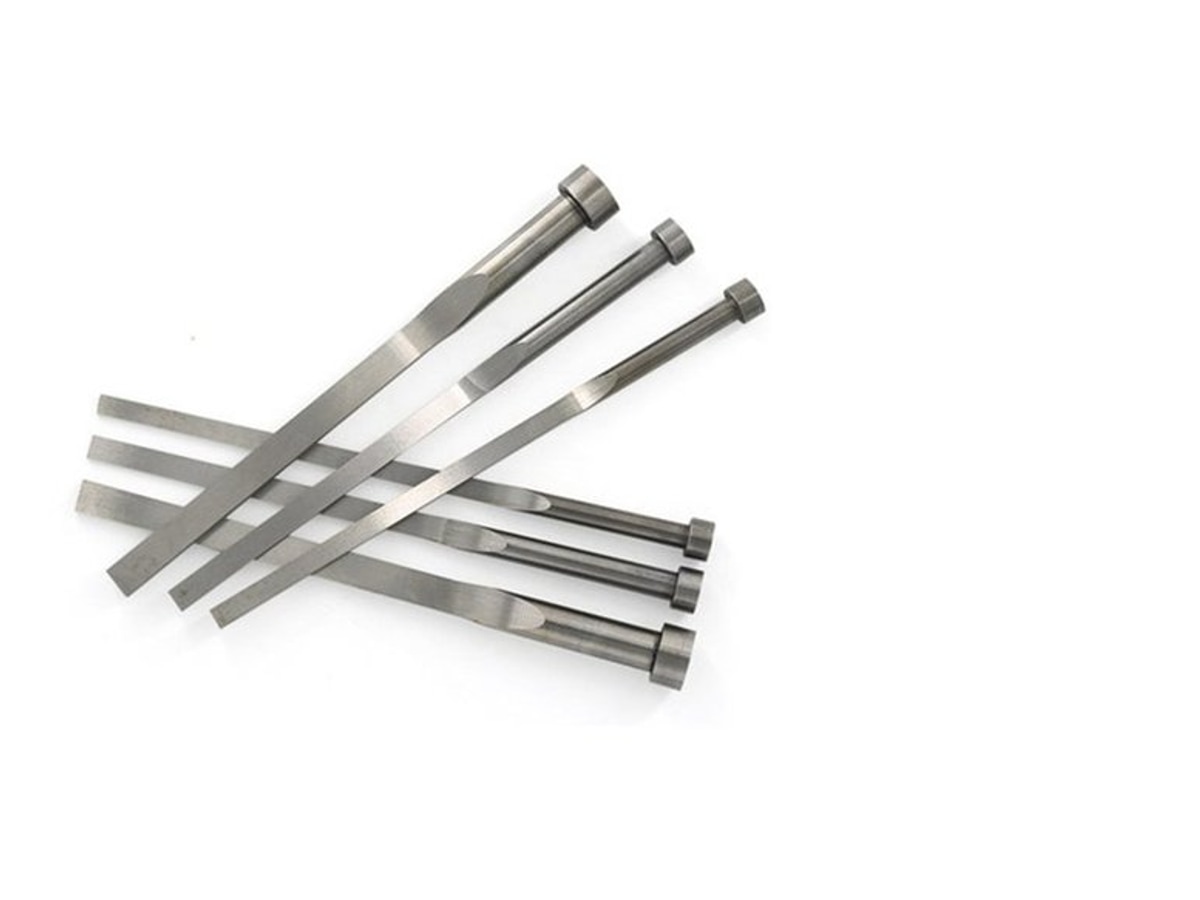
Stepped Ejector Pins
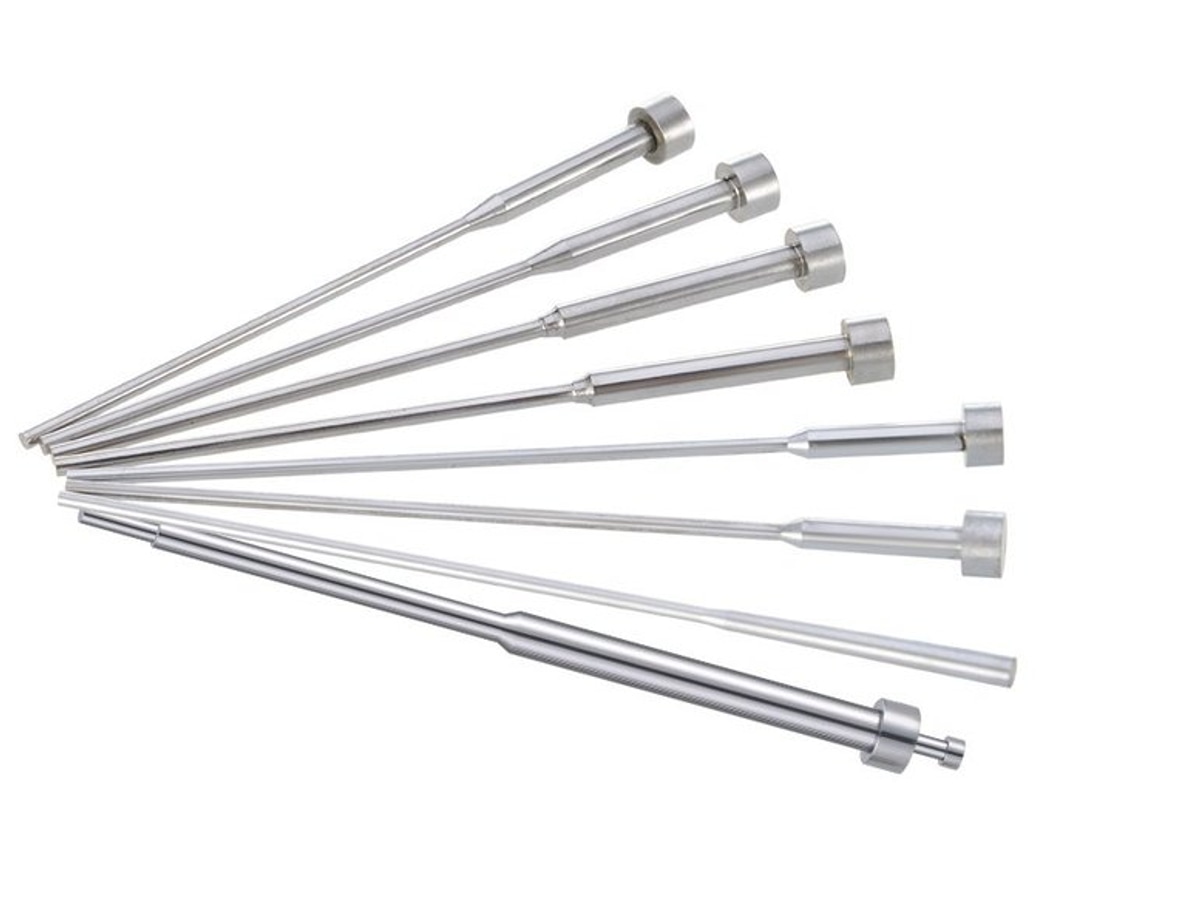
A reduced ejection tip joins a larger support shaft. Step dimensions are selected to suit the available contact area and mold support.
Designs and configurations ↓Material options
SKD61 · H13 · SKH51
The final grade and treatment are confirmed after reviewing your drawing and operating conditions.
Dimensions, tolerances, hardness, quantity and delivery are confirmed in the quotation. No fixed stock specification is implied.
Designs and configurations
Select function and geometry, then confirm material, fits and treatment. Options may be combined; dimensions follow the agreed drawing.
Shaped ends and nitriding
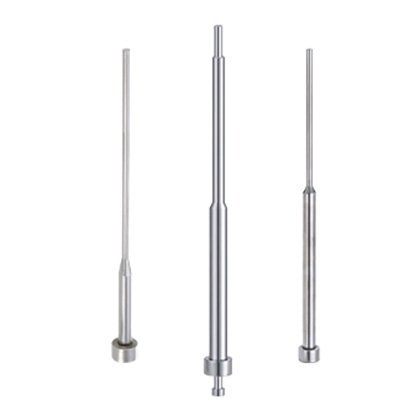
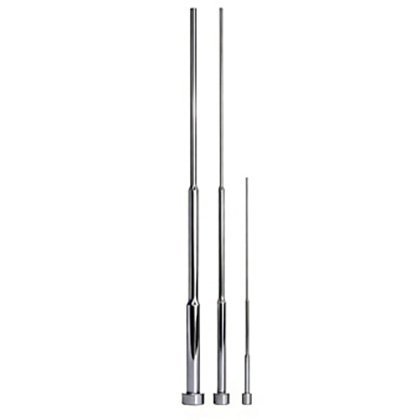
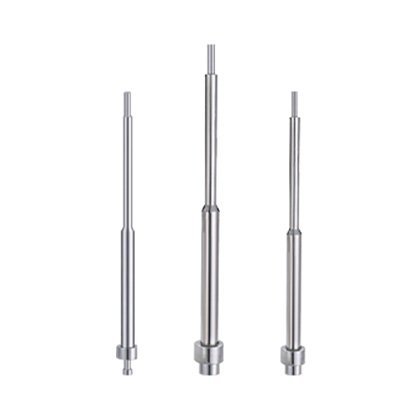
The end may follow the molded surface; choose material and treatment separately.
Send inquiry now →Industries and operating scenarios
A reduced ejection tip joins a larger support shaft. Step dimensions are selected to suit the available contact area and mold support.
Small bosses and locally thin moldings: use a reduced tip where contact is limited but a larger supporting shaft fits behind it.
Send inquiry now →
Materials and treatment options
Stepped pins are graded for reduced-section length, guidance and mold temperature; multi-step parts need coaxiality per drawing.
Send inquiry now →
Surface treatments and finishes
Ejection and sliding surfaces can be nitrided or polished; guard thin sections against distortion from treatment.
Send inquiry now →Surface treatments and finishes
-
Grinding and polishing sliding surfaces
Specify roughness separately for sliding sections and part-contact tips while preserving head and orientation datums.
-
Nitriding option
Confirm suitability, treated areas and case depth for the chosen steel; recheck diameter and thin-section distortion.
Family-specific questions
How does a step ejector pin control ejection stroke?
Diameter steps act as mechanical stops; ground step height sets travel—multi-cavity sets need matched step heights.
What information is needed to order a custom step pin?
Mold drawings with shank, step diameters/heights, length, tolerances and material—photos alone are not enough.
What causes uneven ejection height with step pins?
Step tolerance drift, mixed pin sizes per cavity, or worn plates—inspect step height and diameters on the full set.
How do I choose step ejector pin size?
Match step height to required stroke plus margin; shank must fit the ejector plate pattern and part contact.
 Chat on WhatsApp